A Century of Bathroom Design
The bathroom has evolved from a purely functional space into one of the most considered rooms in contemporary architecture. Yet while technology, materials and lifestyles have changed dramatically, some principles of good design remain remarkably constant: proportion, craftsmanship, functionality and a sense of permanence.
Few brands illustrate this evolution as clearly as Lefroy Brooks. Spanning a century of bathroom design, its collections draw from distinct historical periods, bringing their defining characteristics into contemporary interiors. From Edwardian elegance to Art Deco geometry and mid-century influences, each collection offers a different interpretation of the bathroom and its place within the home.
A Century of Design
The history of the modern bathroom is also a history of changing attitudes towards design.
From the practical elegance of the early twentieth century to the expressive geometry of Art Deco and the refined forms of later decades, each period introduced a new understanding of how a bathroom could look and function.
Lefroy Brooks approaches this history not simply as something to preserve, but as a source of inspiration. Collections such as 1900 Classic, 1910 La Chapelle and 1930 Mackintosh reinterpret the visual language of their respective eras through contemporary manufacturing and engineering.
From Function to Expression
As bathrooms became increasingly integrated into the architecture of the home, their role began to change.
Fixtures were no longer simply functional necessities. Taps, showers, baths, basins and accessories became opportunities to introduce character, materiality and individuality.
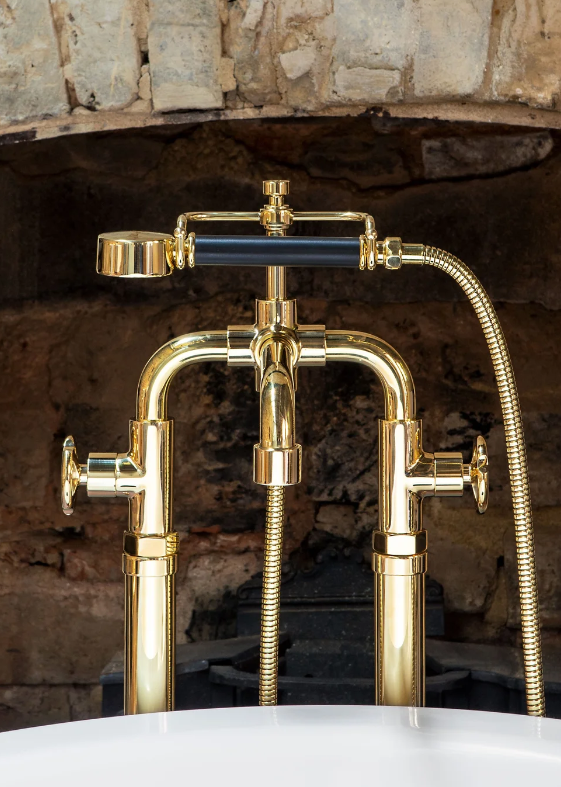
A faceted Art Deco tap can establish a strong architectural language. A traditional brass finish can bring warmth and depth. A sculptural bath can become the centre of an entire composition.
The bathroom becomes less about individual products and more about the relationship between them.
The Past, Reimagined
What makes historic design relevant today is not imitation, but interpretation.
Lefroy Brooks takes visual references from different periods and translates them into products capable of inhabiting both traditional and contemporary architectural settings.
This creates a particular kind of timelessness. The products carry a sense of history without feeling dated, allowing heritage forms to become part of modern life.
Designed to Endure
The evolution of bathroom design is ultimately not only about what changes, but also about what remains.
Good proportions remain relevant. Well-made materials continue to develop character. Functional objects can become part of the architectural identity of a space.
For Lefroy Brooks, looking to history is not about recreating the past. It is about understanding why certain forms continue to resonate.
In an industry constantly moving forward, perhaps the most enduring form of innovation is knowing what is worth keeping.
Sources & Photos: Lefroy Brooks